
How To Blend A Cigar - Cigar Blending 101 with Hostos Fernandez from Tabacalera La Isla – Video Recap | My Cigar Pack
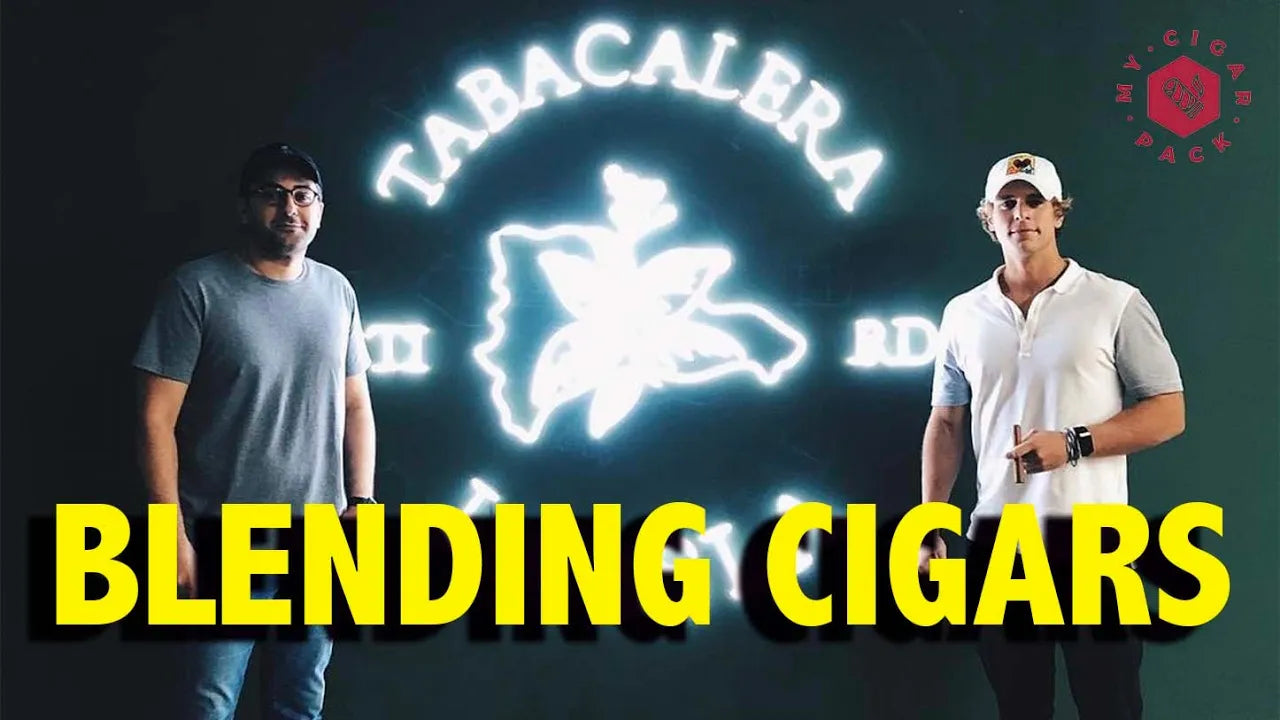
How To Blend A Cigar - Cigar Blending 101 with Hostos Fernandez from Tabacalera La Isla
Cigar blending is one of the most misunderstood and romanticized aspects of premium cigar culture. Many smokers enjoy cigars for their flavors and aromas without ever considering how those characteristics came to exist in the first place. This content matters because blending is the foundation of every premium cigar experience. Without blending, there is no balance, no evolution, and no identity inside a cigar.
This article breaks down cigar blending in a clear, experience-driven way, using the information shared during a hands-on blending walkthrough at Tabacalera La Isla. The goal is not to mystify the process, but to explain it honestly and practically, from the perspective of someone who lives inside cigars every day. What follows is an exploration of how cigars are blended, why tobacco must be smoked to be understood, and how this process shapes everything a smoker experiences once a cigar is lit.
By the end, you will have a deeper appreciation for why premium cigars taste the way they do, why consistency is so difficult to achieve, and why blending is considered one of the most important crafts in the cigar industry.
Cigar blending begins with tobacco in its purest form. Before a cigar ever reaches a finished vitola, individual tobaccos are rolled into simple, rough cigars, often referred to as blending cigars. These are not designed to look good. They exist to be smoked quickly and honestly.
Each tobacco is smoked on its own to understand what it contributes. Some tobaccos deliver sweetness, others bring strength, others improve burn, and some appear flat when smoked alone but become essential once blended. Tobacco cannot be evaluated by sight alone. Smoking is the only way to truly understand it.
Blending is described as mixing solids rather than liquids. Each tobacco retains its character. The blender’s role is to create harmony between those characters. This includes not only flavor but construction and combustion. Where a leaf is positioned inside the cigar affects both taste and burn.
The process requires constant smoking, testing, and adjusting. Tobacco changes from crop to crop and year to year, which means blending is never finished. It is an ongoing process of learning, refinement, and recalibration.
The result of proper blending is a cigar that expresses complexity, balance, and consistency, even though the raw materials are agricultural and naturally variable.
Context
Blending has always been central to cigar culture, even when it was not openly discussed. Historically, blending knowledge was passed down through families and factories, often guarded closely. Today, there is a growing shift toward transparency and education, as more smokers want to understand what goes into their cigars.
This reflects a broader trend in premium cigar culture toward craftsmanship and storytelling rooted in process rather than hype. Smokers are increasingly interested in how cigars are made, not just where they rank or how strong they are.
Blending education also reinforces why premium cigars differ from mass-produced products. The variability of tobacco, the need for constant tasting, and the human element involved all represent traditions that define the handmade cigar industry.
In this context, blending content serves as a bridge between the factory and the smoker, strengthening appreciation for the labor, patience, and expertise required to produce a consistent premium cigar.
Breakdown
This content focuses on process rather than a specific brand or cigar. However, the philosophy behind blending reflects a broader approach often associated with boutique and factory-direct cigar makers.
Tabacalera La Isla represents a hands-on blending environment where experimentation, smoking, and adjustment are part of daily operations. The emphasis is not on secrecy, but on understanding tobacco deeply and respecting its behavior.
This approach is widely appreciated within the industry because it prioritizes balance, education, and long-term quality over shortcuts or purely commercial decisions.
Sensory and Experience-Driven Perspective
Blending cigars is an intensely sensory experience. Every step involves smell, taste, texture, and combustion. Smoking individual tobaccos reveals how different leaves express sweetness, spice, strength, or neutrality.
Some tobaccos feel exciting on their own but overpower a blend. Others seem unremarkable alone yet become essential structural components. This discovery process is part of what makes blending so engaging.
There is also a rhythm to blending. Smoking, taking notes, adjusting proportions, repositioning leaves, and smoking again. Over time, patterns emerge, but surprises always remain. This unpredictability keeps the process alive and demands constant attention.
For smokers, understanding this process adds depth to the act of smoking. Every draw becomes an invitation to notice how flavors interact and how balance reveals itself gradually.
Value
For cigar smokers, blending education offers several practical takeaways:
First, it encourages patience. Not every cigar reveals itself immediately. Some require time and focus to understand.
Second, it explains why construction and burn are inseparable from flavor. A cigar that burns poorly cannot deliver its intended profile.
Third, it highlights why revisiting cigars can be valuable. A cigar that did not resonate initially may make more sense later, especially as your palate evolves.
Finally, it reinforces why premium cigars cost what they do. The amount of labor, testing, and expertise involved in blending cannot be rushed or automated.
Industry Impact and Consumer Perspective
Content like this represents a shift toward informed consumption in the cigar industry. When smokers understand blending, they engage more thoughtfully with cigars and brands.
This benefits consumers by setting realistic expectations and benefits the industry by fostering appreciation rather than hype-driven purchasing.
Blending education also strengthens community. Conversations shift from simple strength comparisons to discussions about balance, construction, and evolution. This creates a more mature and sustainable cigar culture.
From a consumer perspective, transparency builds trust. Knowing that cigars are blended through careful smoking and adjustment adds credibility to the finished product.
Conclusion
Cigar blending is both simple and endlessly complex. It begins with smoking tobacco in its purest form and evolves into a disciplined practice of balance, positioning, and refinement.
Understanding blending changes how cigars are experienced. It invites patience, curiosity, and respect for the craft. It also explains why great cigars feel intentional rather than accidental.
At its core, blending is about listening to tobacco and letting it speak, one leaf at a time. When done well, the result is a cigar that feels complete, expressive, and worth slowing down for.
And that, ultimately, is what premium cigars are all about.