
Cigar Wars I: The Foundation Tabernacle vs. Gueguense – Video Recap | My Cigar Pack
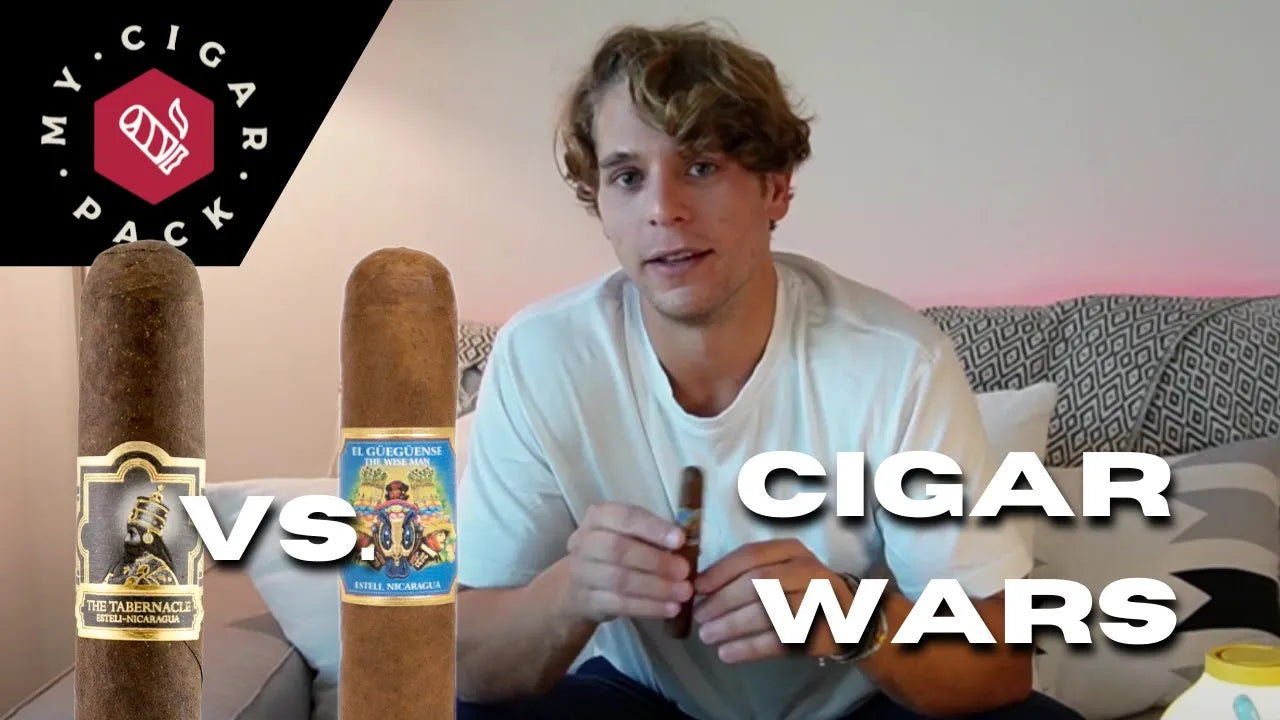
Every cigar smoker reaches a point where preference matters more than hype. It is no longer about what is newest, rarest, or loudest on social media. It becomes about why one cigar feels right at a specific moment while another, equally respected cigar, does not. That exact crossroads is what gave birth to Cigar Wars.
This concept matters because it reflects how cigars are actually enjoyed in the real world. Cigars are not trophies. They are experiences shaped by time of day, mood, strength tolerance, flavor preference, and intention. By placing two cigars side by side and asking a simple but meaningful question, “Why would I choose this one right now?”, the conversation shifts from rankings to understanding.
This first edition of Cigar Wars puts two highly regarded cigars from the same manufacturer against each other, not to crown a universal winner, but to explore contrast. Both cigars come from Foundation Cigars, both are respected, and both are widely appreciated. Yet they offer very different experiences.
What follows is a grounded, experience-driven breakdown of The Foundation Tabernacle versus El Güegüense, and why, in this particular moment, one edged out the other.
Core Summary
This segment introduced a new recurring concept called Cigar Wars. The idea is simple. Two cigars are selected, sometimes from the same manufacturer, sometimes not. Each cigar is broken down based on profile, construction, and overall experience. The goal is not to dismiss either cigar, but to explain why one might be chosen over the other in a given moment.
For the first installment, both cigars came from Foundation Cigars. The two contenders were:
-
The Foundation Tabernacle, a 6 x 52 Toro
-
El Güegüense, shown here in a 5.5 x 50 Robusto
The Tabernacle features a Connecticut Broadleaf wrapper over a Nicaraguan blend produced by AJ Fernandez. It delivers a profile marked by dark fruit sweetness, lingering richness, and a recognizable Jalapa character that gives it a distinctive sweetness and depth.
El Güegüense, on the other hand, presents a Corojo wrapper with Corojo 98 and Corojo 99 components and is produced at Aganorsa Leaf operations. While it may appear more approachable at first glance, it delivers more power, more structure, and a more assertive profile. Its flavors lean toward earth, wood, cedar, and restrained sweetness rather than overt richness.
At this particular moment, the choice leaned toward El Güegüense. The reason was simple. The desire was for strength and structure rather than sweetness. Not because the Tabernacle lacked quality, but because the mood called for a cigar that delivered power without overwhelming sweetness.
El Güegüense won this first Cigar Wars matchup for that reason alone.
Cultural and Industry Context
Cigar Wars fits naturally into modern cigar culture because it reflects how experienced smokers actually think. Very few seasoned smokers ask, “What is the best cigar?” Instead, the real question becomes, “What is the right cigar right now?”
Foundation Cigars is a perfect starting point for this type of comparison because the brand is known for producing cigars with strong identity. Their portfolio is not built around subtle variations of the same blend. Each cigar has a clear intention, cultural reference, and flavor philosophy.
Comparisons like this also reflect a broader shift in cigar media. Rather than scoring cigars numerically or declaring absolute winners, more content is moving toward context-based discussion. This aligns with how premium cigars are consumed. They are situational, ritual-driven, and deeply personal.
Cigar Wars also mirrors conversations that happen organically in lounges, at shops, and among friends. Two cigars are pulled out. Someone asks which one they should smoke. The answer almost always starts with, “It depends.”
Brand and Cigar Breakdown
Foundation Cigars
Foundation Cigars is widely appreciated for its storytelling, intentional blending, and respect for tradition. The brand often draws inspiration from history, culture, and heritage, translating those ideas into cigars with strong personality.
What sets Foundation apart is that their cigars are rarely neutral. Each blend leans decisively in a particular direction. This makes their cigars especially suitable for direct comparison because the contrasts are clear.
The Foundation Tabernacle
The Tabernacle is known for its bold presentation and rich character. Wrapped in Connecticut Broadleaf, it delivers the kind of sweetness and depth that broadleaf enthusiasts gravitate toward.
The flavor profile leans into dark fruit sweetness, richness, and a lingering finish. There is a recognizable Jalapa influence that adds a distinct sweetness and character without becoming sharp or aggressive. The sweetness is present, layered, and persistent.
This cigar feels indulgent. It is the kind of cigar that pairs naturally with slower moments, deeper reflection, and a desire for richness rather than raw power.
El Güegüense
El Güegüense presents itself differently. Despite appearing approachable, it delivers more strength and structure. The Corojo wrapper and Aganorsa Leaf influence contribute to a profile that emphasizes earth, wood, cedar, and restrained sweetness.
This cigar is complex without being loud. The sweetness is present but subtle. The body is fuller. The profile feels more linear, more focused, and more assertive.
El Güegüense is the cigar that answers the call when strength is desired without sacrificing balance. It does not rely on sweetness to carry the experience. Instead, it leans into structure and depth.
Sensory and Experience-Driven Perspective
The experience of smoking these two cigars side by side highlights how dramatically mood influences enjoyment.
The Tabernacle fills the palate with richness. The sweetness lingers. It invites you to slow down. It rewards patience and attention. It feels almost dessert-like in its approach, not because it is sugary, but because of how it coats the palate.
El Güegüense, by contrast, feels more upright. The smoke is structured. The flavors arrive with intention. Earth and wood take center stage, with sweetness acting as support rather than lead.
In the afternoon setting described, the desire was for power without heaviness. The Tabernacle’s sweetness, while enjoyable, felt like more than what was needed at that moment. El Güegüense delivered exactly what the situation called for.
Neither experience was better in absolute terms. One was simply more aligned with the moment.
Educational Value for the Reader
This comparison offers several valuable lessons for cigar smokers.
First, wrapper appearance does not always predict strength. El Güegüense may look more approachable, but it delivers more power than the darker, toothier Tabernacle.
Second, sweetness is not synonymous with complexity. Both cigars are complex, but they express that complexity differently.
Third, cigar selection should be intentional. Understanding your own preferences, time of day, and mood will lead to more satisfying experiences than chasing hype.
Finally, comparisons like this encourage exploration. Trying two cigars back to back sharpens your palate and helps you understand what you truly enjoy.
Industry Impact and Consumer Perspective
From an industry standpoint, concepts like Cigar Wars promote deeper engagement rather than passive consumption. They encourage smokers to think critically about cigars rather than treating them as collectibles or status symbols.
For consumers, this approach empowers choice. It reinforces the idea that preference is personal and situational. There is no single winner. There is only the right cigar for the right moment.
This type of dialogue also strengthens brand appreciation. Understanding why two cigars from the same manufacturer can feel so different builds respect for blending philosophy and craftsmanship.
Conclusion
Cigar Wars is not about crowning champions. It is about clarity.
In this first matchup, El Güegüense took the win, not because it is superior to The Tabernacle, but because it matched the moment more precisely. The desire was for power over sweetness, structure over indulgence, and focus over richness.
Tomorrow, the result could be different. That is the beauty of cigars.
Both cigars remain excellent. Both deserve space in the humidor. The real victory lies in understanding why one resonates more than the other at any given time.
That understanding is what turns cigar smoking from habit into craft, and from consumption into experience.